

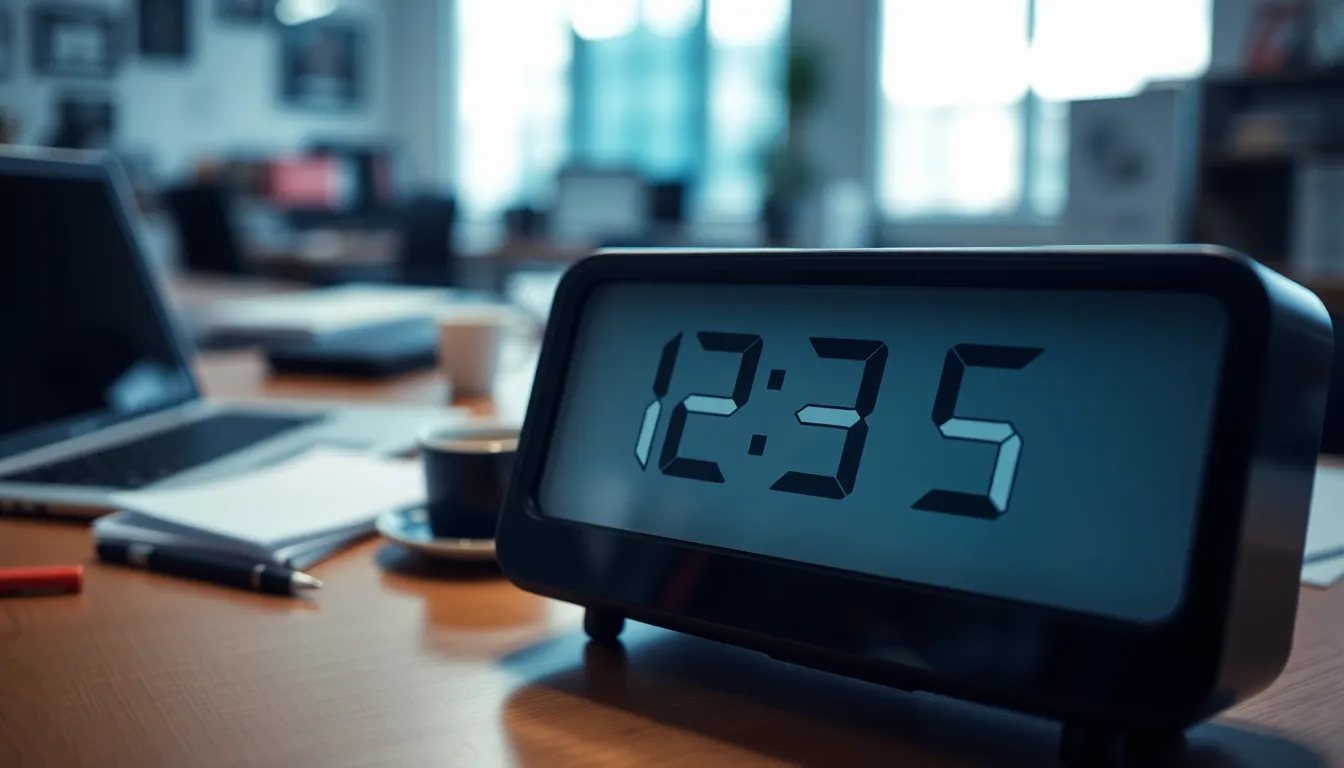
Time can often feel like an elusive concept, especially when waiting for a specific moment. If someone finds themselves glancing at the clock and wondering how long until 12:40, they’re not alone. Whether it’s for a lunch break, an important meeting, or catching a train, knowing the countdown can make all the difference.
Understanding how to calculate the time until a certain hour can help manage daily schedules effectively. With just a bit of math, anyone can determine the remaining minutes and seconds until that crucial moment arrives. This article will break down the process, making it simple and straightforward for anyone curious about the ticking clock.
Understanding Time Calculation
Understanding how to calculate time enhances daily productivity and efficiency. Knowing the remaining minutes until a specified time helps manage schedules effectively.
Importance of Knowing Time
Knowing the time until a specific moment, such as an event or task deadline, directly impacts planning. Timely awareness can minimize anxiety, allowing individuals to allocate time for preparation. Additionally, managing time contributes to improved decision-making and prioritization of tasks.
Different Ways to Calculate Time
Calculating time until a designated moment can occur through multiple methods:
- Digital Clock Method: One can read the current time on a digital clock, then subtract the hour and minute values from the target time, such as 12:40.
- Analog Clock Method: A visual inspection of an analog clock provides a clear estimate of remaining time. Counting the minute hand’s progress toward the target time aids in estimating the exact duration.
- Countdown Timer: Setting a countdown timer on a phone or a digital device counts down seconds and minutes until the specific time.
- Mathematical Calculation: Using basic subtraction with the current time notation (HH:MM) against the target time offers precise results. For example: If it’s 11:30, then 12:40 is 1 hour and 10 minutes away.
- Mobile Apps: Various time management applications provide countdown features, helping calculate remaining time effortlessly. These apps often include reminders and alert functions for enhanced organization.
How Long Until 12:40?

Determining the time remaining until 12:40 involves measuring the current time against the target time. This calculation aids in planning activities efficiently.
Current Time Scenarios
When calculating the time until 12:40, the current time influences the outcome. For specific scenarios:
- Before 12:40: If it’s 11:30, there’s one hour and ten minutes remaining.
- Exactly at 12:40: No time remains; it’s already 12:40.
- After 12:40: If it’s 1:00, forty minutes have passed since 12:40.
Examples of Time Calculation
Calculating the time until 12:40 can utilize various methods. Here are structured examples:
- Using a digital clock: If it’s 11:50, subtract the current time from 12:40, resulting in fifty minutes left.
- Mathematical calculation: For a current time of 12:10, convert the hours and minutes into absolute values (12:40 – 12:10), yielding thirty minutes remaining.
- Countdown timer: Setting a timer for 40 minutes starting at 12:00 provides a visual countdown to 12:40.
Using these methods effectively allows immediate awareness of the time left until the target moment.
Factors Affecting Time Perception
Time perception varies based on multiple factors, influencing how individuals understand and experience time. Key contributors include psychological aspects and cultural influences.
Psychological Aspects of Time
Psychological elements play a significant role in time perception. Anxiety often accelerates the feeling of time passing slowly, especially when awaiting a crucial event. Conversely, engaging in enjoyable activities can make time seem to fly. Research indicates that attention and memory also affect time perception; tasks requiring focus can distort the sense of time. For instance, during a task that demands full attention, individuals may feel less aware of the passage of time. Cognitive load influences time estimation as well; the more mentally taxing a task, the more challenging it becomes to judge time accurately.
Cultural Influences on Time Understanding
Cultural perspectives significantly shape how individuals perceive time. In cultures that prioritize punctuality, such as in many Western societies, time is viewed linearly, emphasizing schedules and deadlines. Conversely, cultures with a more relaxed approach to time, including some Latin American and African societies, may not rigidly adhere to schedules, leading to a more fluid perception of time. Additionally, cultural factors affect the significance assigned to specific timeframes; for example, holidays and social events may prompt a heightened awareness of time leading up to them. These differences illustrate how culture profoundly influences daily experiences and interactions related to time.
Practical Applications
Understanding the remaining time until a specific event like 12:40 provides practical benefits for managing daily activities. Effective time management and using reminders can enhance productivity and organization.
Time Management Tips
- Set Clear Goals: Define what needs completion before 12:40 to maintain focus.
- Prioritize Tasks: Assign priority levels to tasks based on their deadlines and importance.
- Break Down Tasks: Divide larger tasks into smaller, manageable steps to track progress easily.
- Use Timers: Implement timers to allocate specific intervals for tasks leading up to 12:40.
- Review Progress: Regularly check progress towards goals, adjusting plans as necessary to stay on track.
Using Time Reminders Effectively
- Digital Alarms: Set alarms on smartphones or computers to receive notifications ahead of 12:40.
- Calendar Alerts: Utilize calendar apps to schedule reminders that allow for adequate preparation time.
- Visual Cues: Place sticky notes or reminders in visible areas to reinforce awareness of approaching deadlines.
- Countdown Timers: Use countdown timers for real-time tracking of time remaining until 12:40, fostering a sense of urgency.
- Customized Notifications: Personalize notifications to match the nature of the upcoming event, increasing motivation and responsiveness.
Understanding the time remaining until 12:40 can significantly enhance productivity and reduce anxiety. By mastering various calculation methods and utilizing tools like countdown timers and mobile apps, individuals can manage their schedules more effectively.
Awareness of time not only aids in meeting deadlines but also helps in prioritizing tasks. Recognizing the psychological and cultural factors that influence time perception allows for a more nuanced approach to time management.
Implementing effective reminders and strategies can foster a sense of urgency and improve overall responsiveness to impending events. Embracing these techniques empowers individuals to navigate their daily routines with confidence and clarity.

